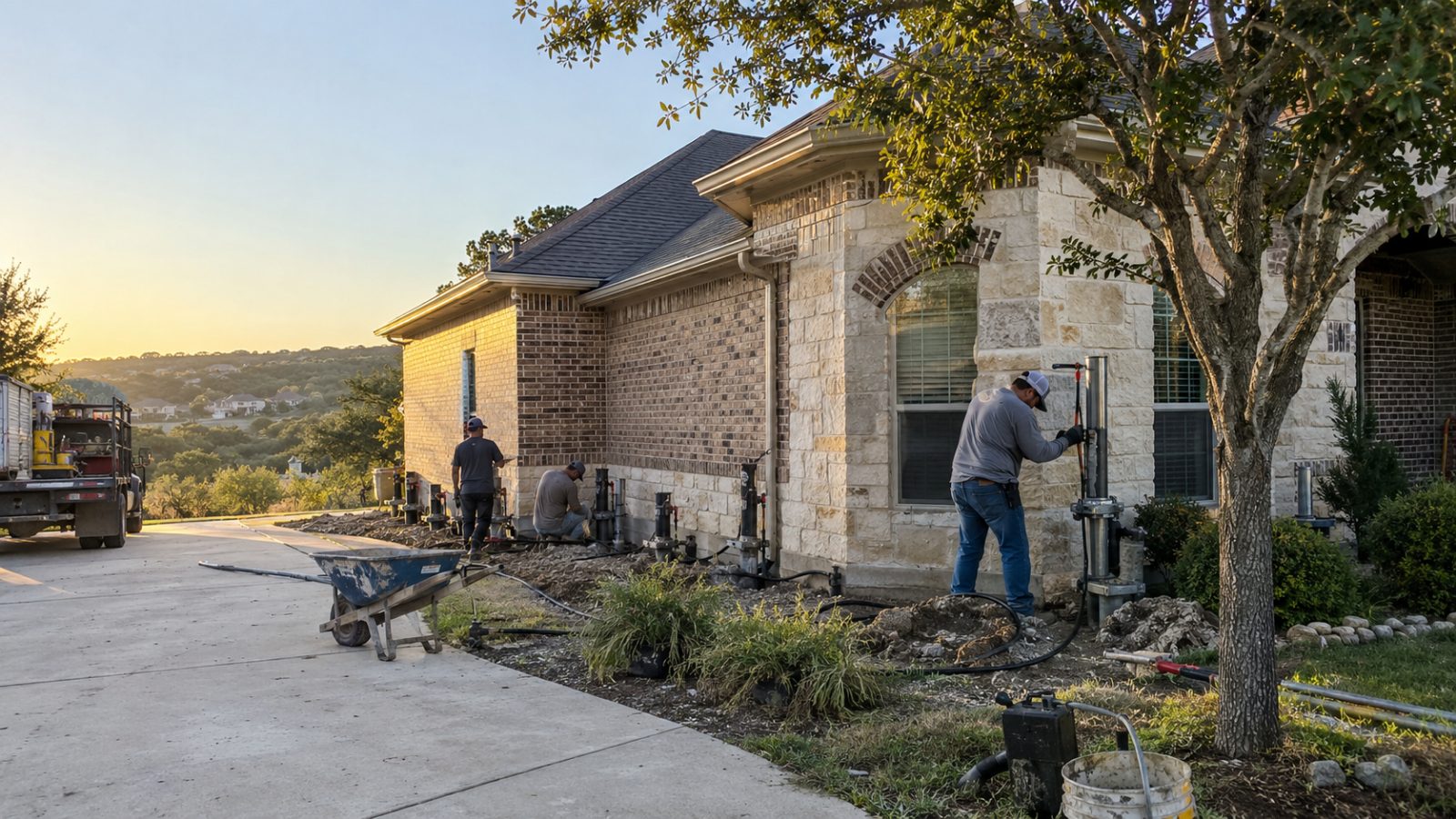
Concrete Slab Foundation Solutions
Slab Foundation Repair
Get help understanding movement in your slab foundation. Get a Free Estimate
Concrete Slab Foundation Solutions
Get help understanding movement in your slab foundation. Get a Free Estimate
Slab foundations are common throughout the New Braunfels area, and movement can affect them in several ways. One section may settle, the perimeter may drop, an interior area may become low, or cracking may develop as different portions of the foundation respond to changing support beneath them. Inside the house, homeowners may first notice tile cracks, uneven flooring, sticking doors, drywall damage, or gaps between walls and trim.
A slab crack alone does not describe the entire problem. The location, direction, displacement, and surrounding symptoms all matter. We look at the slab as part of the whole structure and determine whether the observed conditions point toward settlement that may benefit from stabilization or leveling.
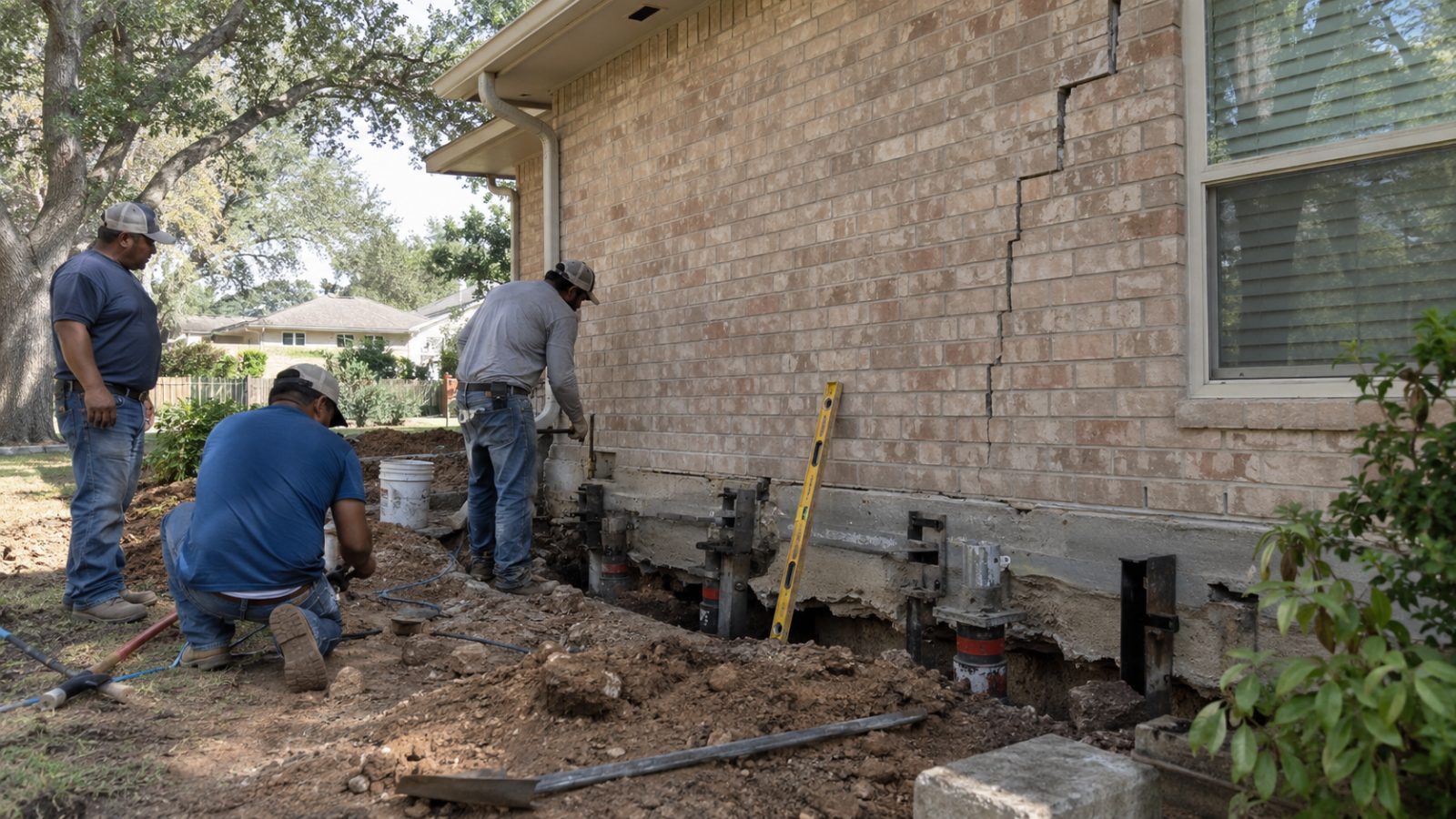
Slab repair can range from supporting an exterior section to addressing low areas beneath the interior of a home. Access is an important part of the plan. Exterior support can often be installed from around the perimeter, while interior support locations may require entry through finished floor areas when no practical outside approach exists. The number and placement of support points should relate to the movement pattern and structural configuration rather than a one-size-fits-all spacing rule.
Settlement along the outside edge of a slab may show up as exterior cracks, interior floor slopes, separations around openings, and changes in wall finishes. Support can sometimes be concentrated along the affected perimeter. We evaluate how the low area transitions into the rest of the foundation so the scope reflects the observed movement.
Low areas toward the center of a slab can require a different repair approach. Interior support may involve accessing the foundation through selected floor locations, making accurate planning especially important. Before recommending interior work, we consider elevations, finishes, room use, and potential plumbing locations.
Cracks in tile, concrete, drywall, or masonry can help reveal how a slab has moved, but no single crack should be interpreted in isolation. A broader group of symptoms usually provides better information. We look for related floor and structural changes before tying visible damage to a repair recommendation.
When added support is needed, the repair plan may combine stabilization with controlled elevation adjustment. The structure is observed throughout any lifting process because older materials and finishes may not respond uniformly. A successful repair plan prioritizes stable support and sensible correction.
| Service | Estimated Cost | Average |
|---|---|---|
| Localized slab support | $2,500-$7,000 | $4,750 |
| Perimeter slab repair | $4,000-$14,000 | $9,000 |
| Interior slab repair | $6,000-$20,000+ | $13,000+ |
| Extensive slab stabilization | $12,000-$30,000+ | $21,000+ |
These broad ranges are intended only for early planning. Access through finished areas, number and depth of support points, foundation configuration, ground conditions, excavation, plumbing considerations, and repair extent can significantly change actual cost.
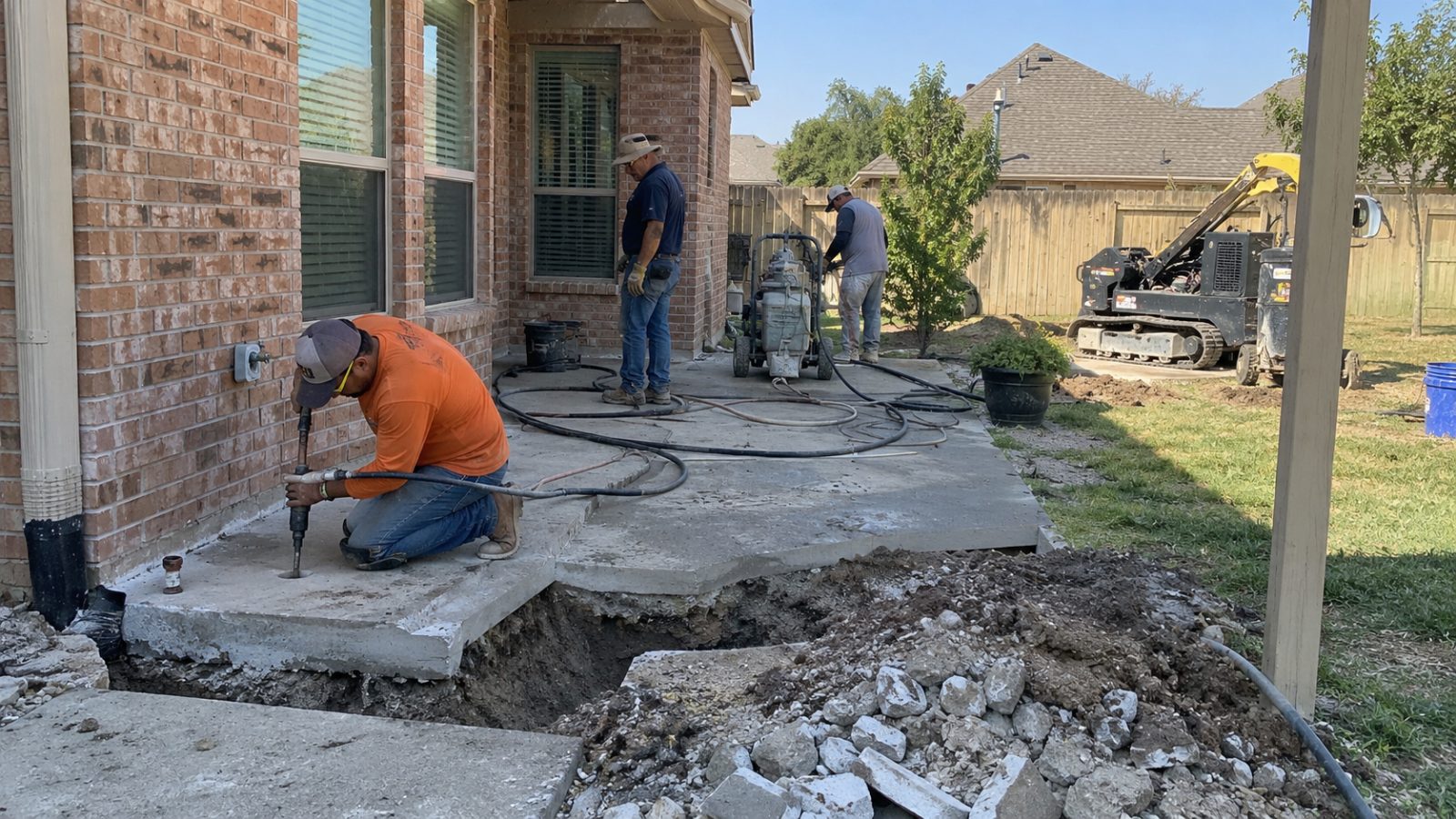
We consider how slab construction, perimeter grade beams, interior loads, flooring, and access influence the repair.
Interior access can be disruptive, so it should be recommended only where the movement pattern supports the need.
We balance elevation improvement with the condition and response of the existing structure.
Homeowners receive a practical explanation of why particular sections are included in the proposed repair.
Seeing cracks or uneven floors in a slab home? Describe the affected areas and request an evaluation.
Free — no obligations
We discuss cracks, slopes, sticking doors, flooring changes, and the locations where you have noticed problems.
Interior and exterior observations help determine whether apparent settlement is localized or extends across a larger area.
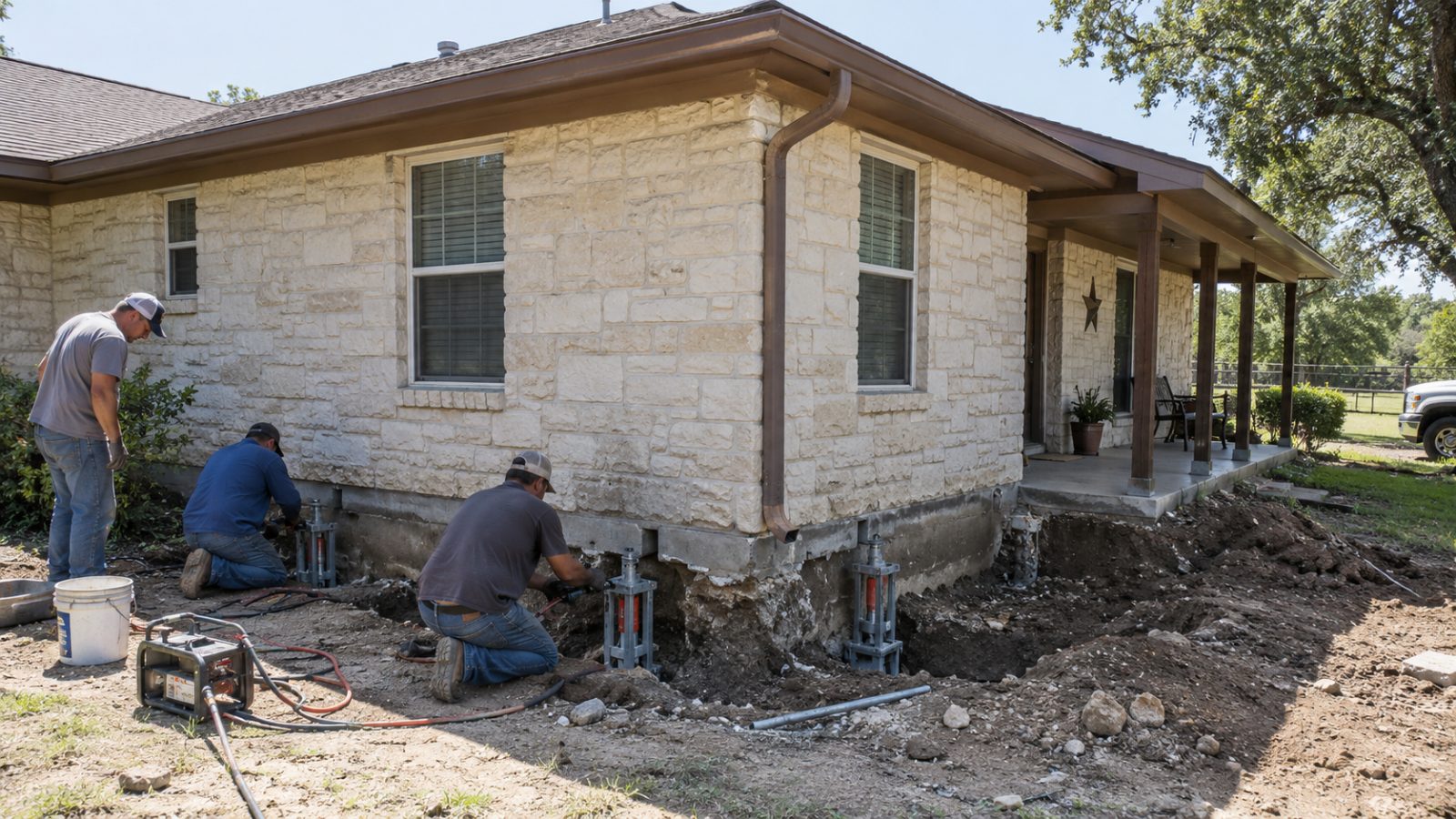
If repair is recommended, we identify practical support locations and any finished areas that could be affected.
Support work is completed at the selected locations and controlled adjustments are made when appropriate.
We walk through the completed work and discuss cosmetic or maintenance items that may be considered afterward.