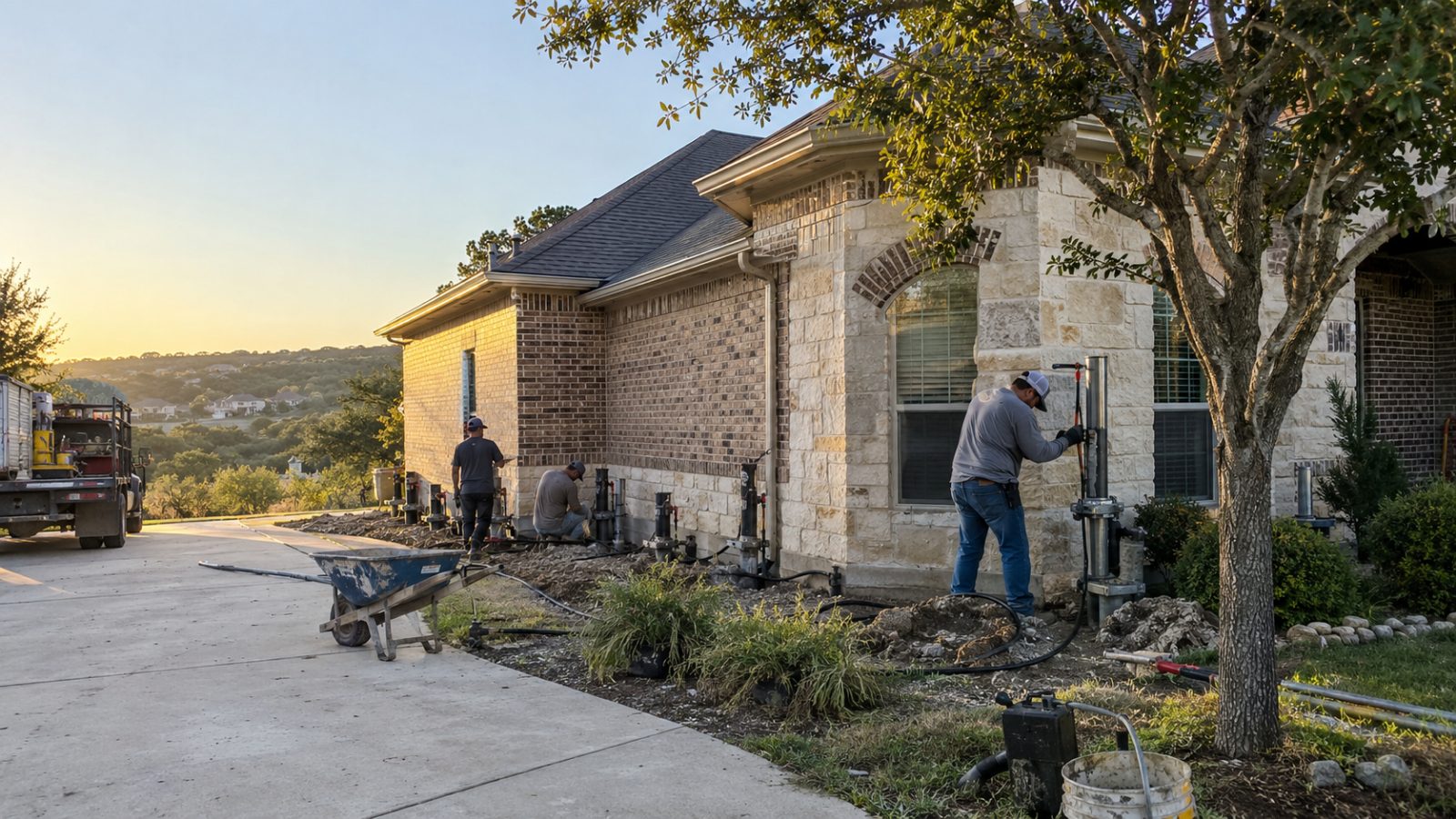
Controlled Correction for Uneven Homes
Foundation Leveling
Have uneven or settled areas evaluated before they worsen. Get a Free Estimate
Controlled Correction for Uneven Homes
Have uneven or settled areas evaluated before they worsen. Get a Free Estimate
When floors slope or one portion of a home has dropped, it is natural to ask whether the house can simply be leveled. In practice, foundation leveling begins with support. A settled area should not be raised without understanding why it moved and how dependable support will be established beneath it.
Leveling also requires judgment about the existing structure. Homes adapt to movement over time. Walls, framing, doors, windows, tile, cabinets, plumbing, and finishes may all have shifted along with the foundation. That means the goal is normally a stable foundation with sensible elevation improvement, not forcing every point of an older home to the exact same measurement.
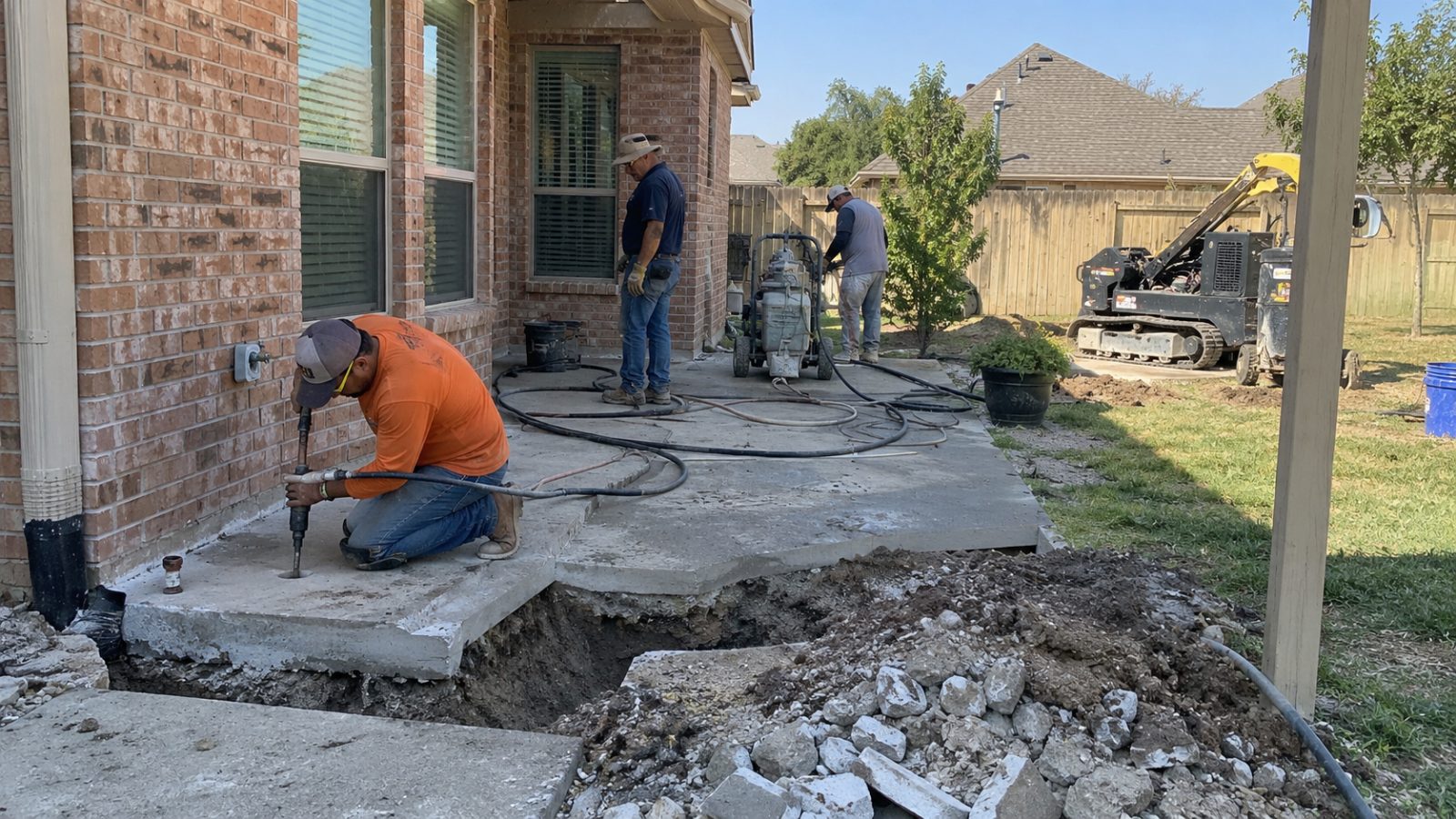
Before leveling, we identify the apparent low areas and determine how the foundation will be supported. Pier systems or other appropriate support methods may be installed before adjustment begins. Elevation changes are then made gradually while the structure is observed. The amount of correction can depend on how long the home has been settled, the condition of framing and finishes, the location of plumbing and utilities, and how the structure responds as loads change.
Uneven flooring is one of the most common reasons homeowners ask about leveling. Elevation differences can help identify low areas, but measurements should be considered alongside cracks, exterior movement, construction type, and other symptoms. The complete pattern matters more than any single reading.
Leveling works best when the affected section has dependable support to carry structural loads after adjustment. That can involve pier installation or another repair approach selected for the foundation. We plan stabilization and elevation correction as connected parts of the same repair rather than independent steps.
Large, sudden movements can place unnecessary stress on an existing house. Adjustment is approached in controlled increments while changes in the structure are monitored. Some homes respond readily, while others reach a practical stopping point before perfect level is achieved.
Doors, trim, drywall cracks, flooring, and other finishes may change during or after leveling. Cosmetic work is generally easier to plan once structural adjustments are complete. Homeowners should also continue watching drainage and moisture conditions around the foundation after the repair.
| Service | Estimated Cost | Average |
|---|---|---|
| Localized leveling | $2,500-$7,500 | $5,000 |
| Moderate leveling with support | $5,000-$15,000 | $10,000 |
| Interior and perimeter leveling | $8,000-$25,000+ | $16,500+ |
| Extensive foundation leveling | $15,000-$35,000+ | $25,000+ |
These are general planning ranges. Actual cost depends on how the foundation must be supported, number of repair locations, access, interior work, foundation type, existing damage, ground conditions, and the practical amount of leveling attempted.
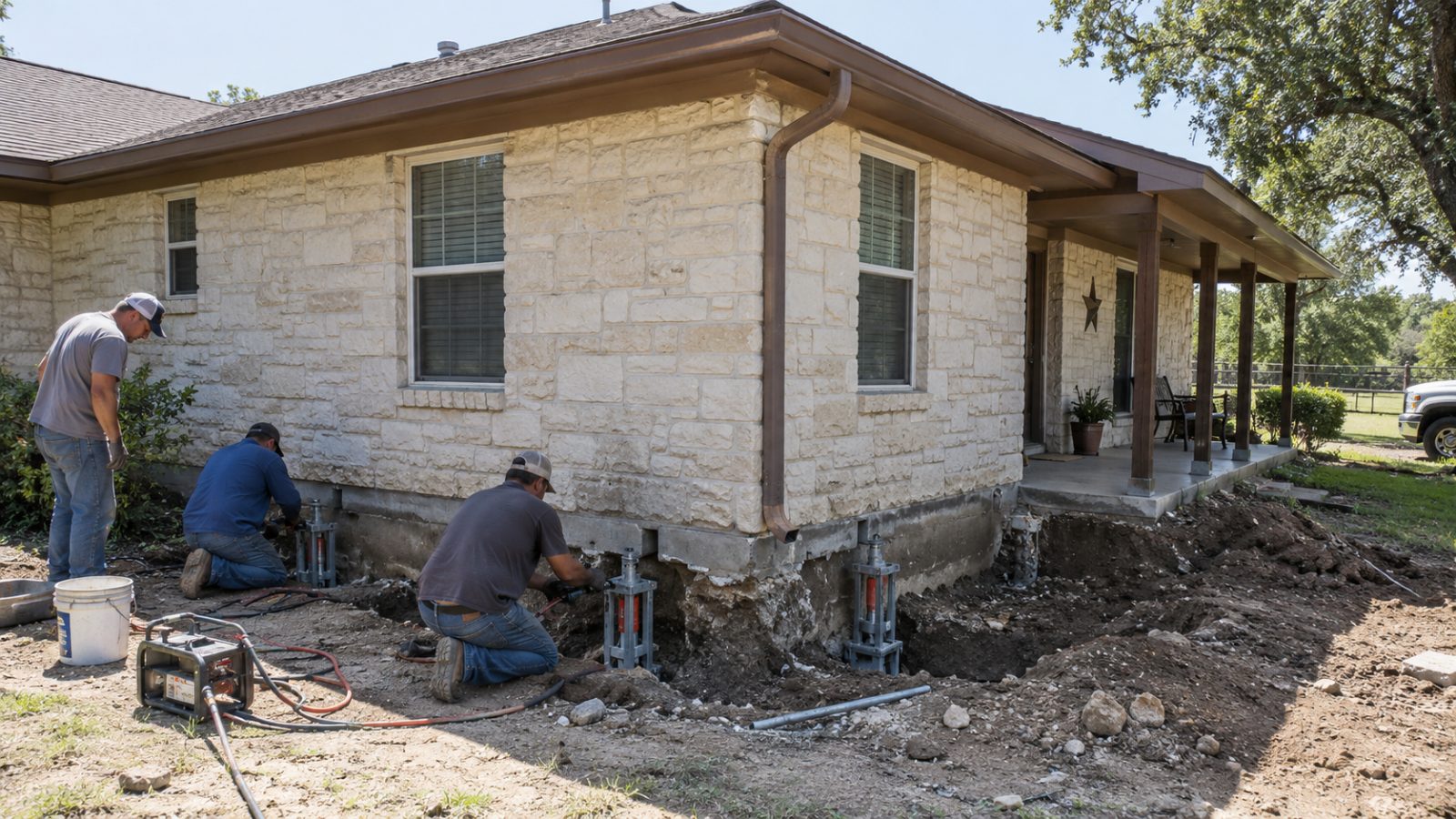
We treat leveling as part of a support plan rather than simply lifting a low area and hoping it stays there.
Elevation changes are made with attention to how the existing structure responds.
The goal is sensible structural improvement, and we do not promise mathematically perfect floors in every existing home.
We explain what may change during leveling and which cosmetic items are usually best handled after foundation work.
Uneven floors or a visibly low section of your home can be evaluated for stabilization and practical leveling.
Free — no obligations
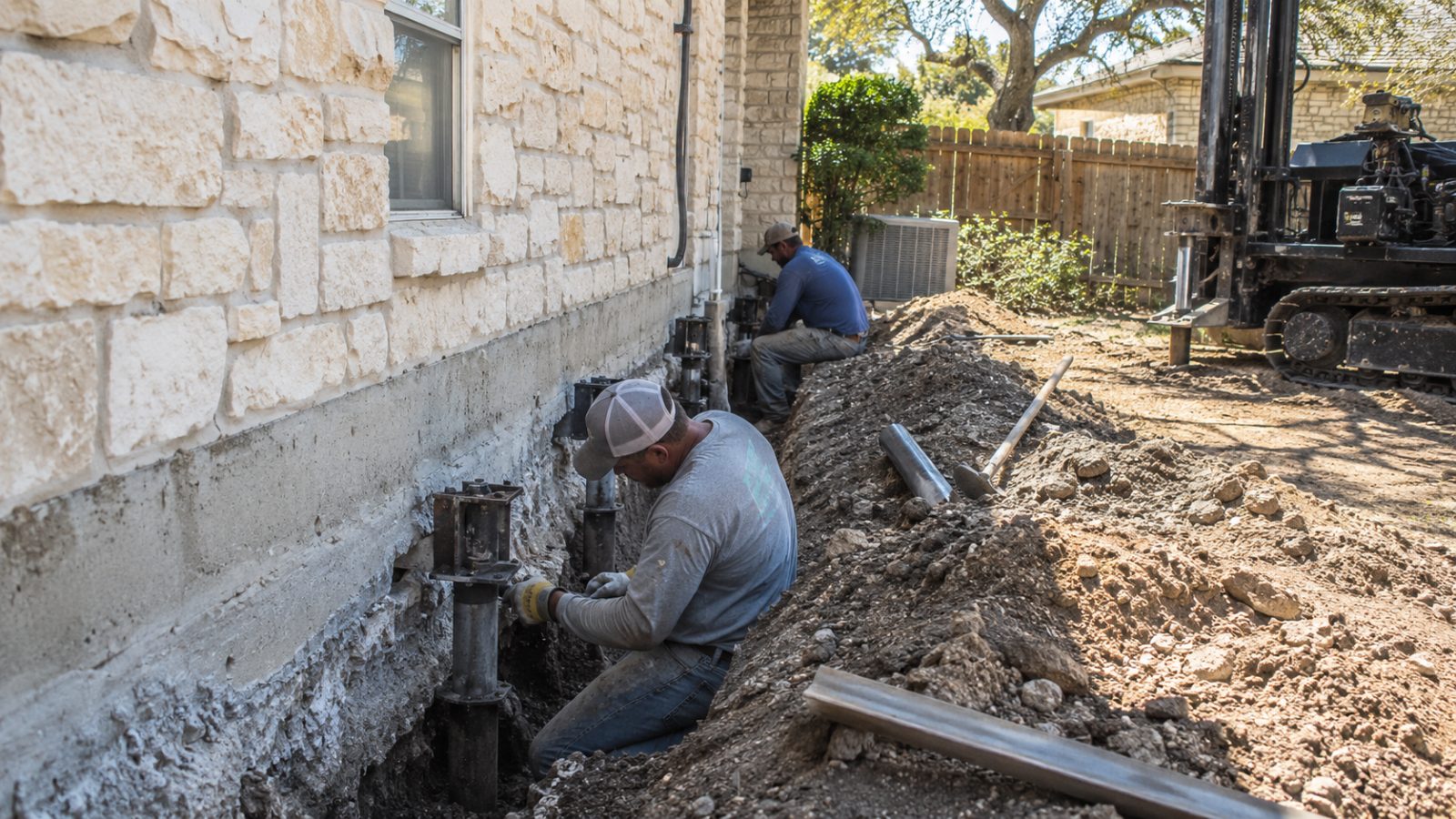
We review floor conditions and related structural symptoms to understand where settlement appears concentrated.
Appropriate support is selected for the affected sections before meaningful elevation correction is attempted.
Access and foundation support work are completed at the locations included in the repair plan.
Settled sections are adjusted incrementally while the house and foundation response are monitored.
We review the completed structural work and discuss observations, finish repairs, and maintenance considerations.