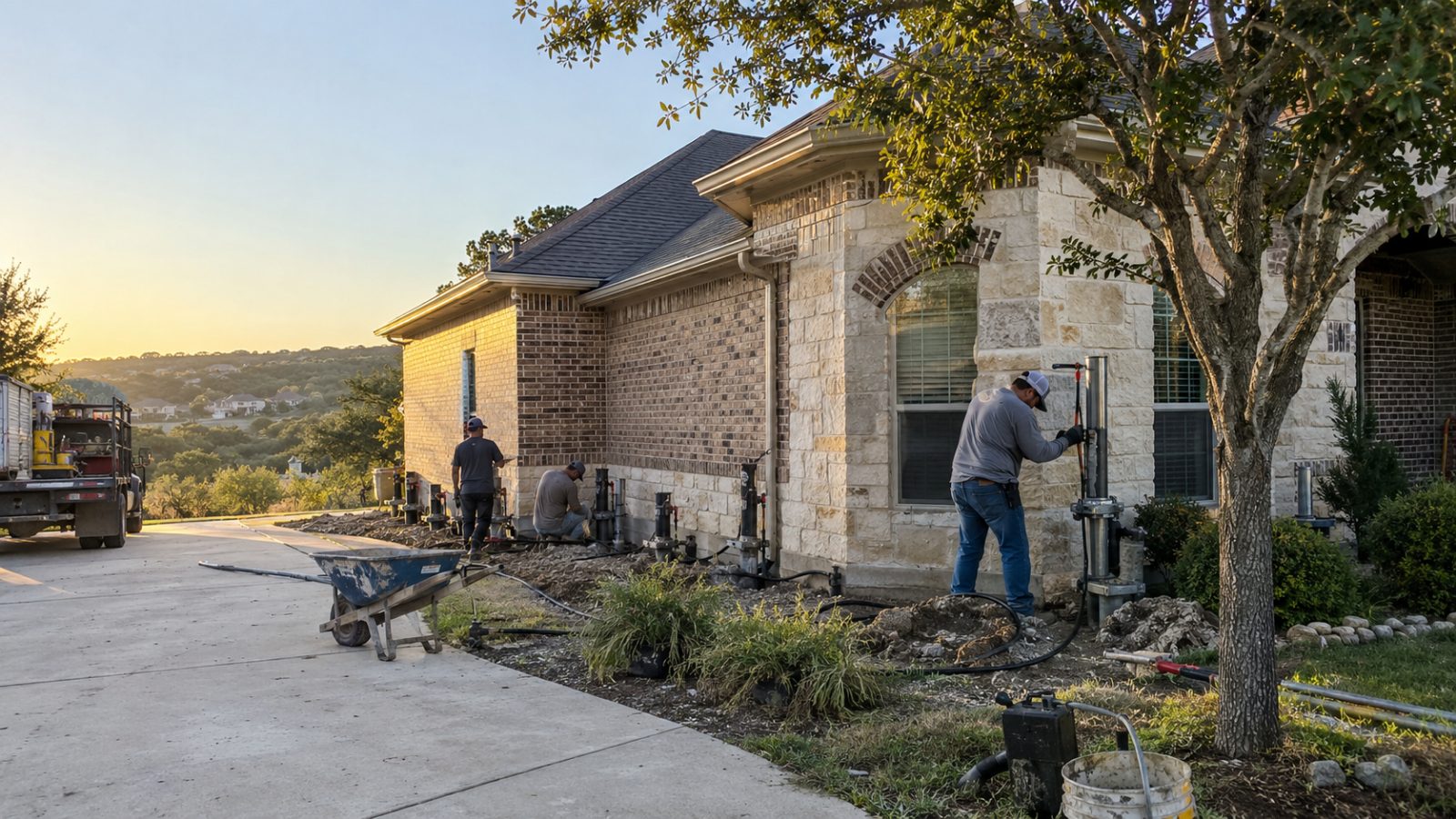
Settlement Repair for Central Texas Homes
Foundation Settlement Repair
Get a clear assessment of the movement you are seeing. Get a Free Estimate
Settlement Repair for Central Texas Homes
Get a clear assessment of the movement you are seeing. Get a Free Estimate
Foundation settlement happens when part of a structure moves downward relative to another part. Sometimes the movement develops slowly and shows up as a recurring drywall crack or door that no longer closes cleanly. In other cases, homeowners notice a cluster of symptoms such as sloping floors, exterior masonry cracks, gaps around windows, or trim pulling away from walls. The important question is not simply whether a crack exists. It is whether the home shows a pattern consistent with ongoing or significant movement.
In the New Braunfels area, settlement can be influenced by soil conditions, changing moisture, drainage, erosion, fill beneath the home, plumbing-related moisture, construction history, and the distribution of structural loads. We evaluate the affected areas and develop a repair approach around the conditions observed at the property.
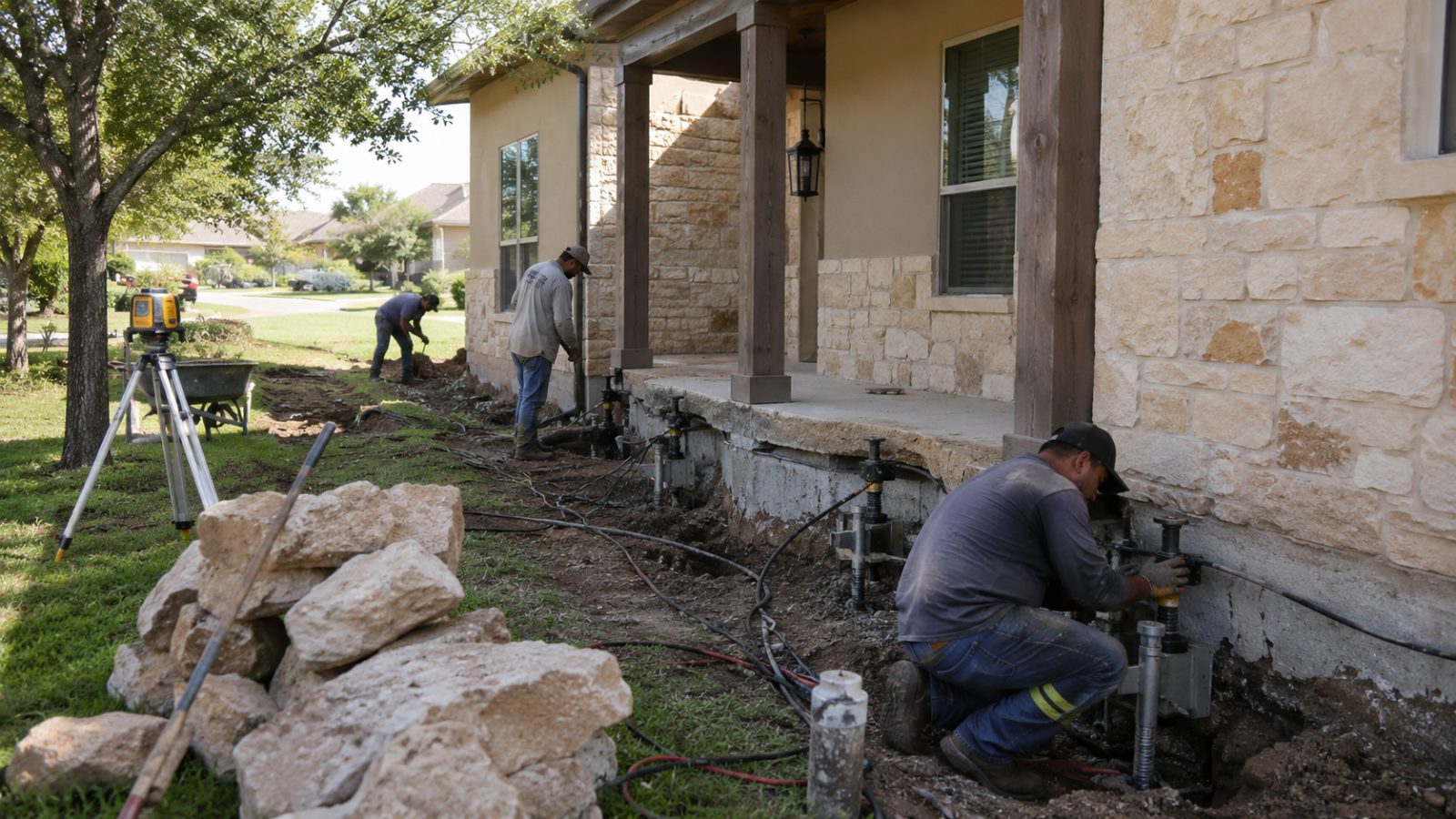
A foundation repair should address the movement that matters without creating unnecessary work elsewhere. We begin by reviewing visible symptoms and how they relate to one another. Floor elevations, crack locations, exterior separations, drainage conditions, and the construction style of the home can all help build a clearer picture. When stabilization is recommended, the scope may involve support beneath specific portions of the foundation, controlled leveling, localized concrete work, or a combination of methods. The repair plan should also account for access and the way adjustments may affect walls, doors, windows, flooring, plumbing connections, and finishes.
We look for a consistent pattern rather than making a decision from one crack. Interior and exterior symptoms, floor changes, site drainage, and the location of apparent movement are considered together. This is especially important in established homes where some cosmetic imperfections may have existed for years. Our goal is to separate ordinary wear from evidence that suggests a portion of the foundation has lost elevation or support.
Not every settlement problem affects an entire house. When movement is concentrated in one section, a repair plan can focus on the areas that need additional support rather than automatically treating every perimeter or interior location. The appropriate support method depends on the foundation, access, soil conditions, loads, and repair objectives. We explain why each proposed support location is included.
Where appropriate, settled sections may be adjusted after support points are prepared. Lifting is performed in a controlled way because the house above the foundation has adapted to its existing position over time. The practical objective is to improve support and recover useful elevation without treating perfect mathematical level as the only measure of success.
Foundation work can change the way doors, cracks, trim, and finishes behave. Some cosmetic repairs are generally best evaluated after structural work has been completed and the building has had time to respond. We explain what homeowners should watch after the foundation work so they can distinguish expected adjustments from changes that deserve another look.
| Service | Estimated Cost | Average |
|---|---|---|
| Localized settlement repair | $2,500-$7,500 | $5,000 |
| Moderate multi-area stabilization | $5,000-$15,000 | $10,000 |
| Extensive foundation stabilization | $10,000-$30,000+ | $20,000+ |
| Foundation evaluation and repair planning | Varies by property | Site dependent |
These are broad planning ranges, not quotes. Actual cost depends on the number and type of support points, foundation construction, access, depth and ground conditions, interior work, repair extent, and other site-specific factors.
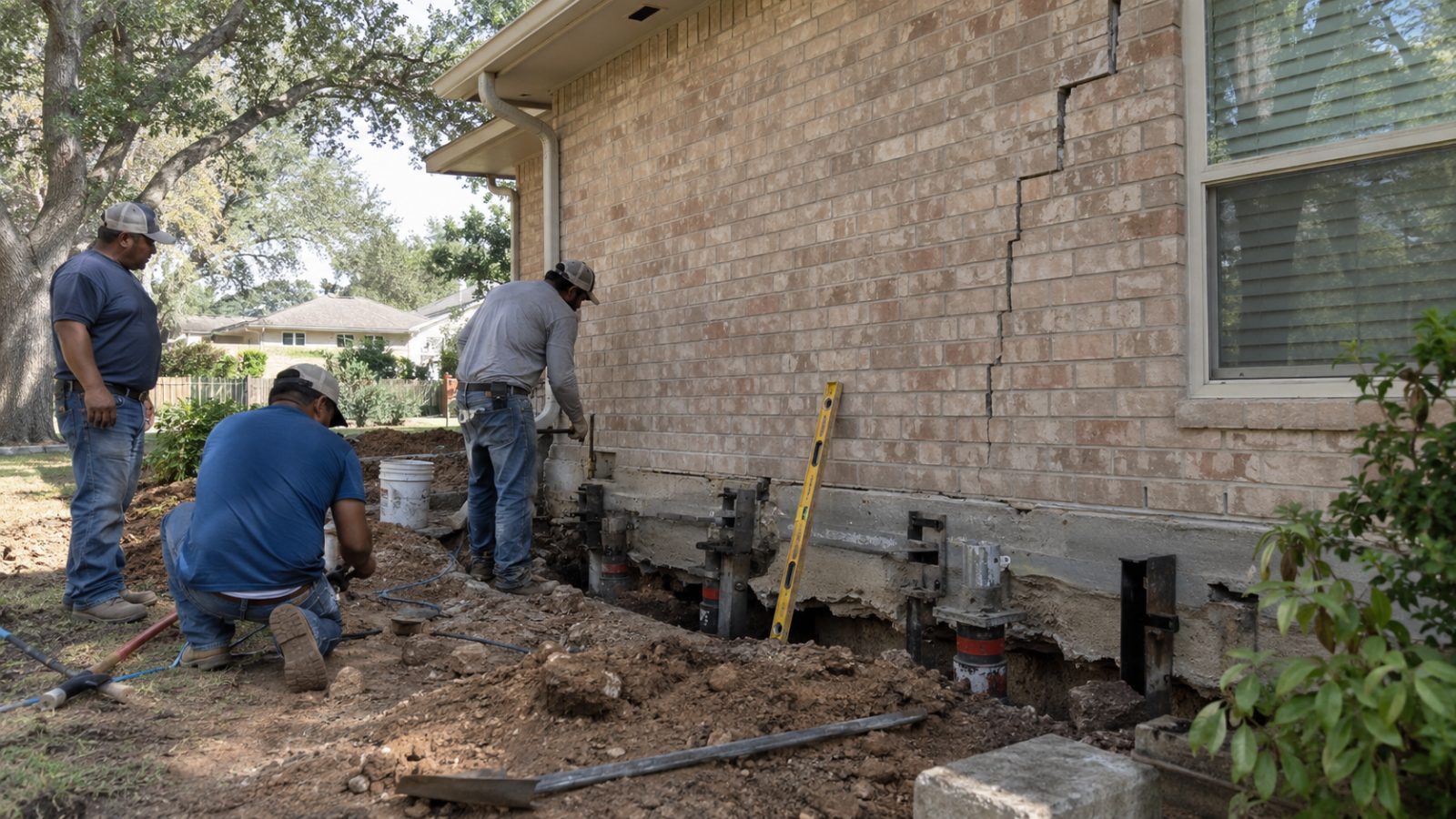
Cracks, elevations, door movement, exterior changes, and drainage conditions are considered together before a repair recommendation is made.
We aim to address the areas that need stabilization rather than assuming every home requires the same number of support points.
Where leveling is appropriate, adjustments are planned around the condition of the existing structure instead of chasing a perfect number at the expense of the home.
We explain what the repair is intended to accomplish and what homeowners may notice before, during, and after the work.
If your home is cracking, shifting, or becoming uneven, start with a conversation about the symptoms.
Free — no obligations
We begin with what you have noticed, where it is happening, and whether the condition appears to be changing.
We review relevant interior and exterior conditions, apparent elevation changes, drainage, access, and foundation construction.
If structural repair is warranted, we explain the proposed stabilization or leveling approach and the areas involved.
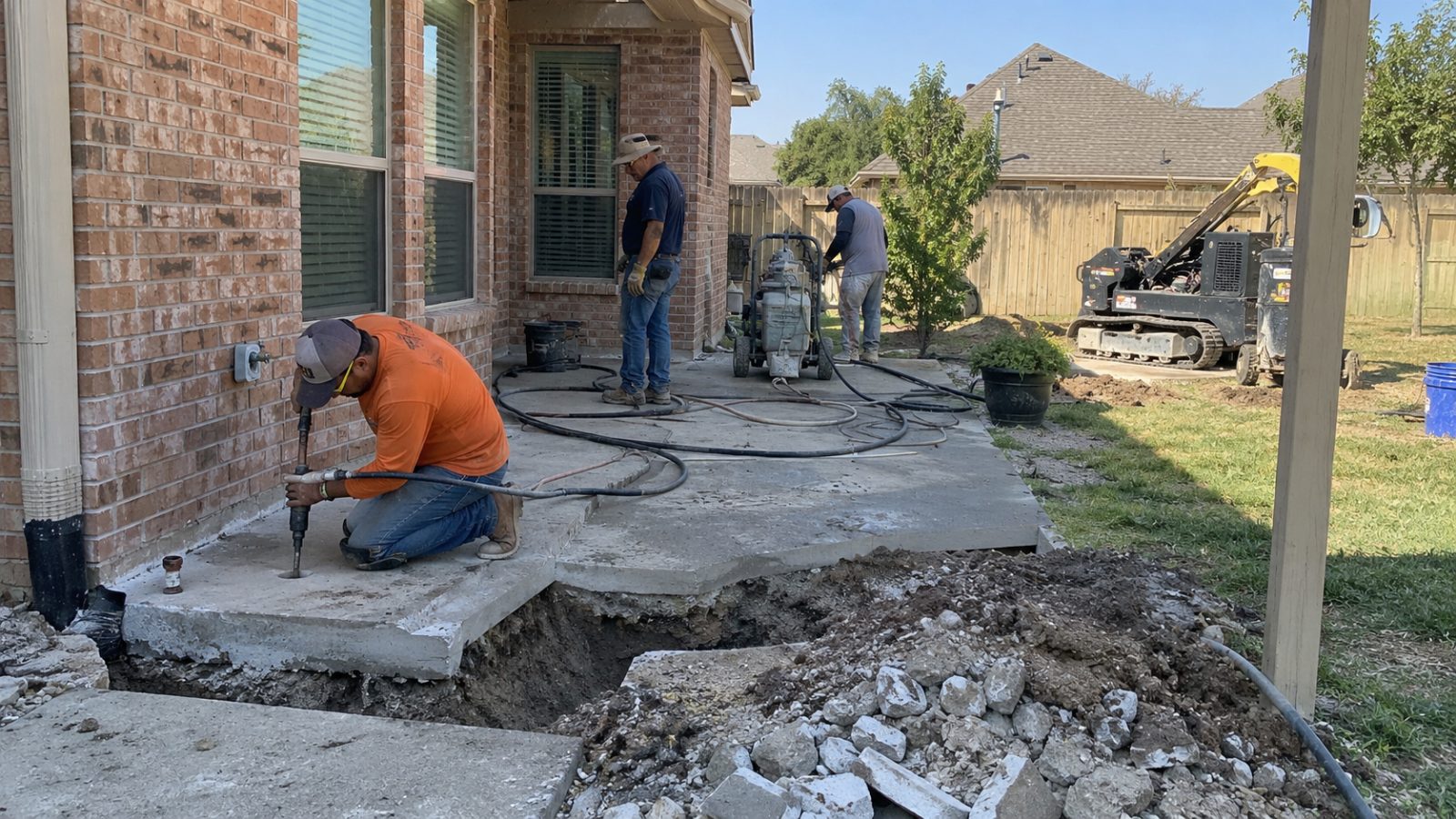
The crew prepares access, installs or adjusts the planned support system, and performs controlled corrections where appropriate.
We discuss the finished repair, visible changes, and practical observations to make after the structural work is complete.